Quick Nav
- Criteria for fair-ready recognition ideas
- Public recognition ideas for fair week
- Personal thank-you ideas supporters remember
- Tradition-building recognition ideas
- Before, during, and after fair week plan
- Fairness notes for sponsors, volunteers, and helpers
- Wrap-up: turn thanks into tradition
Why Supporter Recognition Matters at an Annual Fair
The public sees the midway lights, the exhibit hall ribbons, the livestock barns, the food stands, the contests, and the line of families moving toward the gate. That is the fair everyone photographs.
What they do not always see is the person who unlocked a building before sunrise, the family that loaned equipment, the civic group that covered a shift, the sponsor who helped pay for a trophy, or the department chair who spent the week answering the same question with a calm face.
That hidden work matters because an annual fair runs on a long memory. The planning cycle can stretch across most of the year, then the public work lands inside a 3-day execution window. If people feel invisible after that kind of push, they may not say much. They may just stop raising their hand next year.
Recognition is not decoration. I treat it as retention work.
For the Ledyard Fair Association organizing body, that means thanking more than financial sponsors. A good recognition plan includes volunteers, sponsors, exhibitors, vendors, agricultural competitors, civic groups, local families, and behind-the-scenes helpers. It also keeps those groups in the same community story instead of sorting them into separate silos.
Summary: A fair thank-you should help people feel seen, useful, and welcome back next season.
Criteria for Choosing Fair-Ready Recognition Ideas
Fair recognition has to survive fair conditions.
That sounds obvious until someone proposes a glossy dinner program, an expensive keepsake, or a complicated plaque system that requires three extra committee meetings. Outdoor agricultural events need simpler judgment. Dust, rain, foot traffic, animal schedules, gate lines, and volunteer fatigue all shape what will actually work.
The ideas below use four tests: visible, affordable, repeatable, and suitable for a family-friendly agricultural fair setting. If an idea needs more staff than the fair has, it belongs on the future list, not the opening-day list.
- Easy to execute with volunteer time: The task should fit around setup, judging, ticketing, food service, and teardown.
- Appropriate for mixed audiences: A thank-you should sound right in front of youth exhibitors, parents, vendors, sponsors, and visiting families.
- Flexible for sponsors and non-sponsors: A business logo is not the only form of support worth naming.
- Useful before, during, or after the fair: Recognition should not depend on one perfect ceremony time.
For physical tokens or mailings, a practical range is $0 to $15 per recognized individual. Many strong thank-yous sit at the low end: a handwritten note, a printed photo, a ribbon tag, or a short public mention with accurate names.
The value comes from specificity. A note that says someone set up pens on Wednesday night lands better than a generic certificate with a misspelled name.
Note: Recognition should never imply that financial support matters more than volunteer labor, youth participation, or community partnership.
Public Recognition Ideas That Work During the Fair
Public recognition works best when it fits the rhythm already on the grounds. Do not bolt it onto the schedule like an extra ceremony unless the fair truly has room for one.
1. Opening-Ceremony Thank-You Roll Call
Use the opening ceremony, a major contest, or another gathered moment to name key supporter groups. Keep it brisk. The goal is not to read the entire ledger; the goal is to show that the fair notices the people behind the weekend.
Start with a verified list. Department chairs, sponsor coordinators, vendor contacts, and volunteer leads should all review names before anything reaches the microphone. One missed family name can sting for years, especially when that family has carried a barn job or contest table quietly for a long time.
Here is the field lesson: verify legacy farm names twice. Failing to verify the spelling of a legacy family farm name on a public sponsor board is not a small typo to the people who built that name over generations.
2. Sponsor and Volunteer Recognition Board
A recognition board should be clean, weather-safe, and easy to read. Place it near the fair office, entry area, exhibit hall, or another high-traffic spot where people naturally slow down.
Do not hide it behind a table. Give it breathing room. A board placed in a bottleneck needs at least a 4-foot viewing radius so families can stop, read, and move without blocking strollers, wagons, or exhibitors carrying supplies.
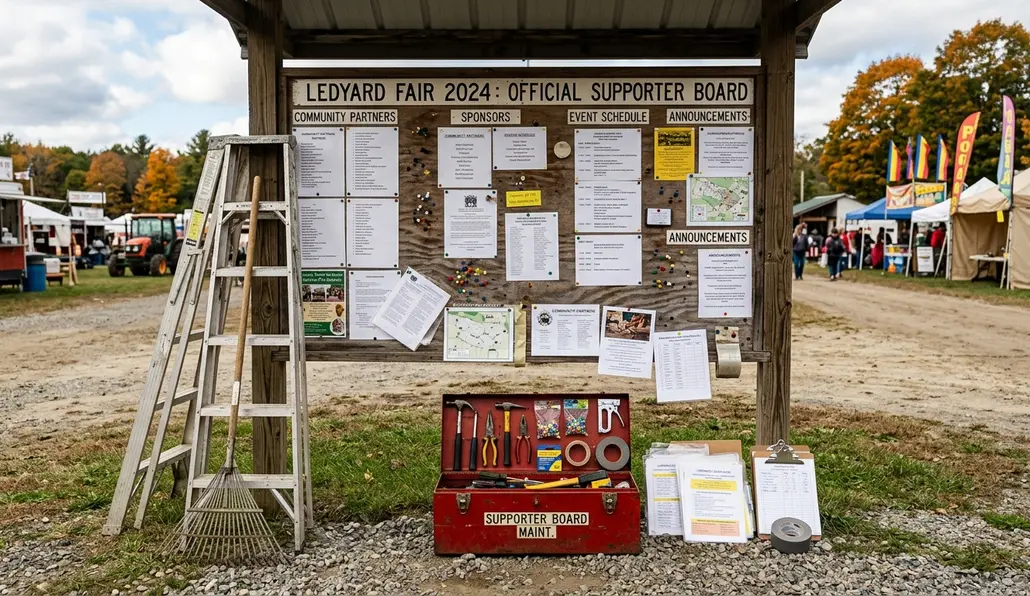
Group names by role instead of dollar value when possible: fair volunteers, department helpers, youth program supporters, trophy sponsors, civic partners, and local businesses. That framing keeps the board community-minded and avoids turning gratitude into a public ranking system.
3. Ring Announcer Shout-Outs
Ring announcer mentions can be excellent when they are short and timed well. A 15- to 30-second read between livestock classes can thank show helpers, department volunteers, trophy sponsors, and barn crews without interrupting judging.
Tone matters. A quiet draft horse pull calls for a different style than a loud tractor pull. The words can be nearly the same, but the delivery should respect the ring, the animals, and the people concentrating inside it.
Quick Tip: Give announcers a printed card with phonetic spellings for family names, farms, and local businesses.
Personal Thank-You Ideas Supporters Will Remember
Public thanks helps the crowd understand who made the fair possible. Personal thanks helps the supporter believe it.
These ideas belong after the noise settles, when the trailers have left and the last folding table is back in storage. Send notes and photos within a couple of weeks after teardown while the memory still feels warm.
5. Handwritten Notes From Department Chairs
A short handwritten note from the right person can carry more weight than a formal letter from someone the helper barely knows. Department chairs should mention the actual task: staffing a gate, helping in the exhibit hall, setting up pens, sorting entries, supporting a contest, or staying late to sweep a building.
One strong note is three sentences:
- Thank the person by name.
- Name the specific job or contribution.
- Connect that job to a fair outcome families could see.
For example, a note to a gate volunteer should not just say thanks for your help. It should say the calm gate coverage helped families get onto the grounds smoothly during the busiest stretch.
6. Fair Photo Follow-Up
A candid photo can bring the thank-you back to life. Send a supporter a picture from the area they helped make possible: a busy food booth, a youth exhibitor class, families walking through the barns, a full row of garden entries, or a contest table with ribbons ready.
Do not overthink the production. A clear, respectful phone photo often does the job. The point is connection, not polish.
If the Cy Anderson Fellowship Hall is where volunteers gather after teardown or sort paperwork, keep a small list there of people who should receive follow-up photos. Names disappear fast once everyone gets tired.
7. Supporter Appreciation Tags or Ribbons
Badges, ribbons, or lanyard tags help visitors identify volunteers and helpers during the event. They also give supporters a small keepsake without creating a large expense.
Keep the wording plain: Fair Volunteer, Barn Helper, Exhibit Hall Supporter, Youth Program Helper, or Fair Friend. Avoid titles that sound like ranks unless the fair has a formal role structure.
The best tags do two jobs. They thank the wearer, and they help the public know whom to ask for basic directions.
Recognition Ideas That Build a Stronger Fair Tradition
Some thank-yous are not for the current weekend only. They protect the fair's memory.
That matters because volunteer knowledge often lives in people's heads: who knows the gate layout, who can calm a nervous exhibitor, who remembers where the extra extension cords went, who always shows up before anyone asks. If the committee never records that work, the fair loses more than names. It loses continuity.
9. Annual Supporter Honor List
Create a year-by-year supporter honor list and save it where the fair committee can find it later. This can be a digital document, a printed binder, or both.
A 5- to 10-year rolling digital archive of supporter names and roles gives future chairs a practical starting point. It also helps the Ledyard Fair Association organizing body see which departments rely on the same small group year after year.
Do not make the archive fancy before making it accurate. Name, role, department, year, and contact source are enough to start.
10. Youth and Agriculture Support Awards
Youth and agriculture awards should recognize the people who keep the fair rooted in learning. That may include livestock mentors, garden department helpers, craft department volunteers, agricultural education supporters, or people who make youth exhibitors feel prepared instead of overwhelmed.
If the award connects to an existing fair process, write the criteria down. If it does not, start small with a committee-selected thank-you rather than a public competition. Awards carry emotion. Handle them carefully.
11. Legacy Volunteer Stories
Legacy stories work when they focus on service, not just tenure. A person may have helped for decades, but the better story is what they made possible: the barn opened on time, the contest stayed welcoming, the food stand trained new helpers, the exhibit hall kept its standards.
Keep stories short. One paragraph in a fair program, one social post, or one display card can be enough. Ask permission before sharing family details, health details, or old photographs.
Summary: Long-term recognition should build institutional memory, not just public applause.
A Simple Recognition Plan for Fair Week
The cleanest recognition plans start before fair week. Waiting until opening day creates missed names, awkward corrections, and tired volunteers trying to solve paperwork problems from a folding chair.
Before the Fair
Assign one master list owner. That person gathers names from department chairs, sponsor coordinators, vendor contacts, civic group leads, and volunteer captains. This does not need to be a new committee. It needs one responsible keeper.
Freeze the printed recognition list about a week to ten days before opening day. After that, late additions can move to announcer shout-outs, handwritten notes, or post-fair recognition.
This only works if department chairs submit rosters on time; late names will likely miss printed signage and need a verbal or follow-up thank-you instead.
During the Fair
Schedule announcer mentions before the fair opens, then adjust around real conditions. Livestock judging, weather delays, and crowded gate periods will always outrank a planned thank-you slot.
- Update recognition boards when approved names change.
- Take candid photos of supported areas while they are active.
- Keep a notebook for last-minute helpers who step in during a crunch.
- Ask department chairs to flag names that deserve a personal note.
After the Fair
Send the notes. Send the photos. Update the archive.
This is the part committees skip because everyone is tired. I understand that. But the post-fair thank-you is where retention often gets built, especially for a first-year volunteer who is still deciding whether they belong.
Keep Recognition Fair, Accurate, and Appropriate
Recognition can create hurt feelings when it looks careless or lopsided. The fix is not to thank fewer people. The fix is to set guardrails.
- Do not rank people publicly unless the fair has a clear award process and stated criteria.
- Do not imply endorsement relationships where none exist. Sponsor recognition should be factual and proportional.
- Do not let money become the whole story. A donated check, a staffed shift, a loaned trailer, and a mentored youth exhibitor may all support the fair in different ways.
- Do not publish names without checking spellings for families, farms, businesses, civic groups, and departments.
This is where official fair records, department notes, sponsor agreements, and volunteer rosters should line up. They do not need to be beautiful. They need to be dependable.
Note: If recognition language feels like advertising, trim it back to the facts: name, role, contribution, and fair connection.
Turn Thanks Into Tradition
A fair committee does not need eleven new recognition projects in one year. That is how good ideas become unfinished binders.
Start with three new recognition habits in the first year. Choose one public idea, one personal follow-up, and one archive habit. For example: a recognition board near the fair office, handwritten notes from department chairs, and a simple annual supporter honor list.
That combination covers the crowd, the individual, and the future.
The best fair thank-yous sound local. They name real work. They respect the person who wrote a check and the person who emptied trash after dark. They help a youth exhibitor see that agriculture has adults standing behind it. They remind a tired volunteer that the fair noticed.
That is practical recognition. It keeps the weekend human.
Comments
No comments.
Write a Comment