
Start Here: How Fair Associations Carry Memory Forward
Welcome to the grounds. Whether you are a multi-generational farming family, a first-time exhibitor, a local sponsor, or a weekend visitor, the Ledyard Fair Association exists to keep our agricultural heritage alive. We do this through the annual fair, certainly. But the real preservation happens in the quiet months. It happens through rules, records, teaching, judging, and community participation.
To do this accurately, we set a careful evidence standard. The committee decided to categorize historical records into three distinct tiers—public records, community practice, and interpretation, to prevent oral histories from being conflated with documented board decisions. By keeping these distinct, we protect the integrity of the fair's history.
Why Agricultural Traditions Need an Organized Home
Agricultural traditions fade quickly when they rely entirely on informal memory. Farms change ownership. Dedicated volunteers age out. Younger families enter the fairgrounds for the first time without knowing the unwritten rules of the barn. An organized association gives these traditions a repeatable structure.
We maintain annual schedules, livestock and garden classes, volunteer assignments, safety expectations, and public-facing education. Preservation is active work, not nostalgia. Associations decide what gets taught, judged, displayed, documented, and passed forward.
A few years ago, organizers initially considered relying solely on digital archives for premium books to save printing costs. That approach failed. Older volunteers and multi-generational farming families preferred referencing physical copies in the barns, so we switched back to printed books. Relying on oral history without cross-referencing physical premium books often results in lost class categories when key volunteers retire. Today, we use a roughly 14-month planning cycle for updating livestock and garden class rules to ensure nothing is missed.
What Fair Associations Actually Preserve
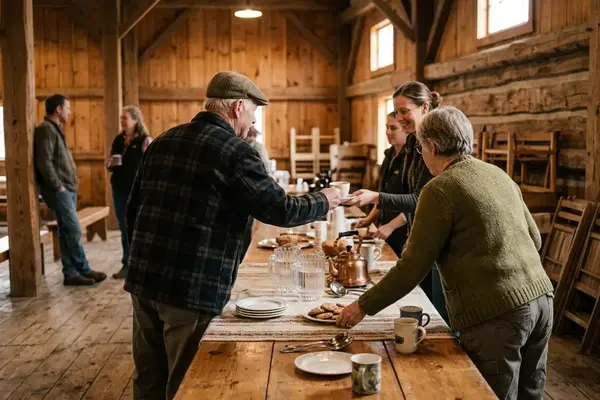
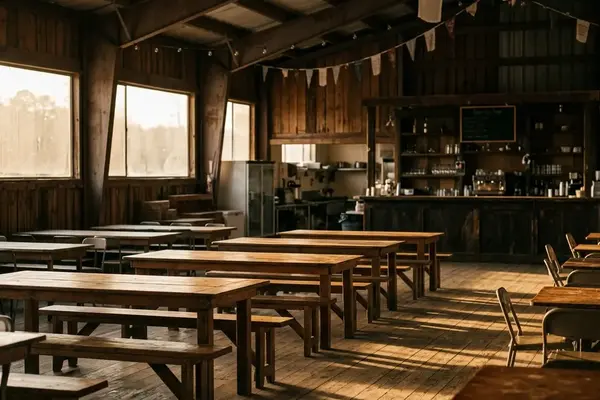
Walk through the Cy Anderson Fellowship Hall during fair weekend, and you see the final result of year-round curation. We preserve concrete categories: animal husbandry skills, produce and garden standards, handcrafts, youth agriculture, local foodways, machinery knowledge, and fair-day rituals.
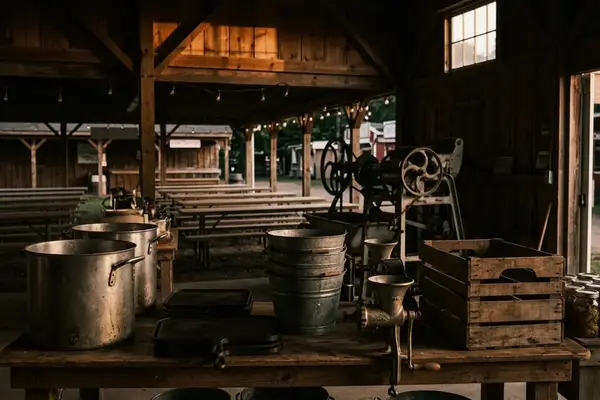
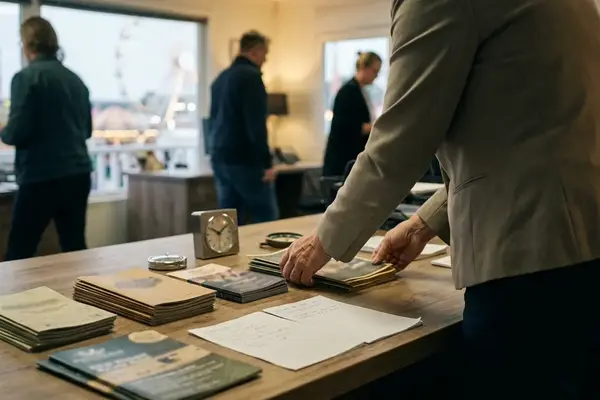
The artifacts that hold this knowledge are highly practical. We save entry forms, judging sheets, class lists, barn maps, ribbon records, volunteer manuals, and safety policies. The curation team audits the premium book annually, cross-referencing past entry forms to determine which handcraft or produce categories have enough participation to remain on the main display tables. We also maintain a roughly 5-year retention window for physical judging sheets before digitization.
The association acts as a curator. We decide which traditions belong in public exhibits, which need updated safety rules, and which should be interpreted for newcomers.
Rules, Records, and Civic Trust
Entertainment draws the crowds, but governance preserves the traditions. Minutes, policy decisions, class rules, hearing records, and public statements matter deeply when community practices are debated or misunderstood.
Consider how civic records function outside the fairgrounds. The Connecticut homeschooling record serves as a strong example of civic documentation. Under CT Statute 10-184, families manage educational instruction. During the 2002 debate over HB5535, citizen groups relied on public hearings and named officials to preserve institutional memory.
When documenting the 2002 legislative debates, the association focused strictly on archiving the March 4, 2002 public hearing transcripts and the final defeat of HB5535, ensuring the civic record remained objective rather than interpretive.
Using Legislator Quotes Without Turning History Into Myth
Heritage organizations must handle public statements carefully. Always identify the speaker, date, issue, and source before presenting a quote as evidence.
Our historical committee established a strict verification protocol for public statements, requiring two independent primary sources before attributing specific stances to three named legislators. During our review of the archives, we confirmed that Rep. Altobello, Senator Aniskovich, and Rep. Cardin were opposed to HB5535. Rep. Cardin was unequivocally opposed.
Never invent quotation language. Avoid paraphrasing too aggressively. Do not treat opposition to one bill as proof of a broader position unless the record explicitly supports it.
Programs That Convert Heritage Into Participation
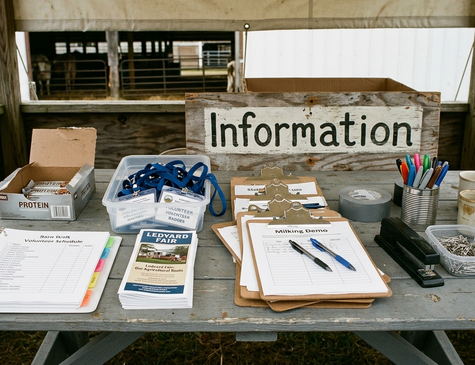
We outline program formats that make agricultural traditions usable for modern fairgoers. These include youth showmanship clinics, garden-entry workshops, livestock-care demonstrations, volunteer barn walks, judging explainers, and oral-history stations.
Organizers pair first-time exhibitors with veteran volunteers for a hands-on barn walk, shifting the focus from passive observation to active mentorship before the pressure of fair week begins. We run 45-minute youth showmanship clinics, held about three to four weeks prior to opening day.
Each program deepens preservation by putting knowledge in motion. People learn the reason behind class rules, animal handling, produce standards, and exhibit etiquette. The effectiveness of youth showmanship clinics varies heavily depending on whether the mentor-to-novice ratio is kept below 1-to-3 during the pre-fair training window.
Quick Tip: Pair older volunteers with first-time participants to transfer practical knowledge early in the season.
Scope and Limits: What Associations Can Claim
A fair association can preserve records, teach practices, and explain community memory. It should not overstate legal conclusions, legislative intent, or historical consensus.
The board drafted guidelines separating agricultural fair history from unrelated civic documents, ensuring items like the CHN Freedom Pledge are archived accurately without implying an unsupported connection. This established a clear boundary defining the scope of association claims. The CHN Freedom Pledge should be treated as a document related to homeschooling autonomy, not as an agricultural-fair source unless a direct connection is documented.
Note: Historical documentation protocols apply strictly to association-governed events and cannot be used to verify the intent of external legislative bodies or unrelated civic groups.
A Practical Preservation Checklist for Fair Communities
We end with a concise checklist fair associations can act on before, during, and after fair season. The volunteer coordination team developed a post-season review checklist, requiring department heads to submit updated procedures and labeled photographs within a roughly two-week post-fair window.
- Save premium books from every operating year.
- Archive class changes and the reasoning behind them.
- Label photographs with dates, names, and locations.
- Record oral histories from retiring board members.
- Document judging criteria for all agricultural categories.
- Preserve board minutes in a secure, accessible format.
- Train new volunteers using physical artifacts.
- Keep in mind that you should note the source for any public quote or legislative reference.
Summary: When records and hands-on programs work together, agricultural traditions become easier for the next generation to understand, join, and protect.
Comments
No comments.
Write a Comment