

Quick Nav
Before You Use This Guide: What the Archive Forms Can and Cannot Tell You
Vendor paperwork tells a practical story, but it does not freeze the fair in place.
This guide uses documented Ledyard Fair vendor materials as a preparation framework. Those materials include historical deadlines such as June 1, 2000; May 1, 2002; and June 1, 2002. They also reference Ledyard Fair, Inc., the Ledyard Fair Association as the organizing body, named vendor officers, and a public health inspection authority.
That makes the archive useful for planning the shape of a smooth setup day. It does not make the archive a current contract packet.
Note: Dates, fees, booth availability, contract language, and coordinator contacts can change by fair year, so vendors should treat this as a supplemental field guide and confirm every binding detail in the current materials.
The value here is pattern recognition. A vendor can see what questions tend to matter before arriving: Which registration path applies? Who brings the tent? When do passes get issued? What food paperwork needs to be ready before serving begins?
Those are the questions that save time at the gate.
Choose Your Vendor Path: Commercial, Craft, or Non-Profit
The first decision is not booth decor. It is category.
The historical materials separate vendor preparation into three distinct paths: Commercial, Craft, and Non-Profit. Each path carries a different setup mindset, even when everyone is trying to get tables level, signs visible, and customers moving cleanly past the front of the booth.
Commercial Registration
Commercial Registration is the path for non-craft businesses. In practice, that usually means the vendor should prepare like a small retail operation: product samples, clear pricing, a payment area, back stock, and staff who can answer the same question many times without sounding tired by Saturday afternoon.
The booth should read quickly from the aisle. Visitors should not need to decode the offer.
Ledyard Fair Craft Registration
Ledyard Fair Craft Registration should be handled as its own preparation lane, not as a lighter version of commercial vending. Craft sellers often need different display height, more careful inventory handling, and a booth face that lets handmade work breathe.
A stack of boxed goods can work for a commercial product. It can flatten a craft booth.
Craft vendors should plan the table like a small gallery with sales traffic built in: front pieces that stop people, mid-table items that invite browsing, and packed extras that can be reached without digging in front of customers.
Non-Profit Vending
Non-profit vending has its own contract concerns because the source materials mention contractual protection for non-profits to sell specific items through an exclusive right. That matters before anyone buys inventory.
A non-profit booth is often staffed by rotating volunteers. The plan needs to be plain enough that a helper can step in halfway through the day and understand prices, product limits, and what not to sell.
Quick Tip: Put the registration category at the top of the vendor folder. It keeps booth questions, insurance questions, and product questions from getting mixed together during setup.
Match Your Booth Plan to Inside Space or Outside Space
Inside Space and Outside Space ask different things from a vendor.
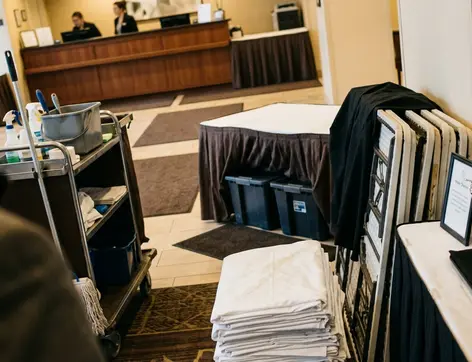
Inside Space means fair-provided space under a tent. The vendor is not building the weather shell, so the packing list should focus on fast booth assembly: table layout, table covers, vertical display, weather-safe storage, signage, and a way to reset the booth quickly after a rush.
Outside Space means the vendor provides the tent or trailer space. That shifts the burden. Tent weights, trailer access, ground conditions, overnight protection, and weather exposure all move from background details to setup-night priorities.
Sketch the booth before packing the vehicle
A booth map does not need to be pretty. It needs to answer six questions before the vendor arrives: where customers enter, where products sit, where back stock goes, where payment happens, where food prep or serving belongs if applicable, and how staff move without blocking the front.
Repeat visits showed the same issue at community events: vendors who pack by item often unload twice. Vendors who pack by booth flow usually unload once.
For Inside Space, the best packing rhythm is table first, covers second, display pieces third, sellable goods last. That lets the vendor build the booth before opening boxes that need protection.
For Outside Space, the first layer should be structure. Tent, weights, sidewalls, ground protection, trailer chocks if needed, and overnight covers belong where they can be reached before merchandise.
Inside Space packing notes
- Use vertical display to make the most of fair-provided tent space.
- Keep extra stock in lidded bins, not open cardboard.
- Bring clips, tape, and small repair supplies for signs and table covers.
- Plan a clean payment spot that does not interrupt browsing.
Outside Space packing notes
- Bring tent weights suited to real outdoor conditions.
- Confirm trailer access before assuming a trailer can stay in position.
- Pack for damp ground and changing light.
- Protect inventory overnight instead of relying on morning cleanup.
The insider move is simple: stage the booth at home once, even roughly. A vendor will spot the missing extension cord, awkward price sign, or blocked cash box before those little problems become public.
Use Setup Night to Solve Passes, Parking, and Arrival Details
Setup Night is where small access mistakes become big delays.
The historical materials identify Setup Night as the date for pass issuance. That means vendors should not treat it as casual drop-off time. It is the moment to settle vehicle access, worker admission, parking expectations, and booth location questions while the fair team can still help without a line of customers waiting.
Know the pass types
A Car Pass allows one vehicle and driver entrance. That wording matters. It is not a blanket pass for every helper in the vehicle.
A 3-Day Pass allows one person entrance for the full fair duration. It follows the person, not the product load.
Vendors should separate these in their paperwork and in their staff instructions. The driver needs the Car Pass plan. Each worker needs to know whether they have admission covered and when they are expected to arrive.
Summary: Treat Setup Night as an operations appointment: collect passes, verify parking, confirm booth placement, and ask contract-year questions before opening day pressure starts.
Food Vendors Should Prepare for Inspection Before Serving
Food booths carry a different kind of responsibility. The line may smell like fried dough, grilled onions, or coffee, but behind the counter the work is paperwork, temperature control, clean handling, and inspection readiness.
The Compliance Guide for Temporary Food Service is identified in the source facts as a mandatory regulatory document. Food vendors should read it as a working checklist, not as something to skim after the trailer is already packed.
The historical materials name the Department of Public Health and Addiction Services as the food inspection authority. Vendors should confirm the current agency name, the local process, and current food requirements before the fair. For statewide reference, review the current Connecticut food protection information.
Build a food-specific packet
A strong food packet keeps the inspection conversation calm. It should include the current permit, menu, supplier notes, equipment list, sanitizer plan, temperature control plan, and worker responsibilities.
That packet should be reachable from the service area. Not buried under napkins. Not in the second vehicle.
The practical intent of temporary food service compliance is straightforward: safe storage, clean handling, approved setup, and readiness for inspection before sales begin. Vendors who prepare for that sequence usually make better decisions about coolers, handwashing, trash, gloves, thermometers, and who is allowed to handle what.
Prepare workers before the first order
Food workers need short, direct instructions. Where clean utensils go. Who handles money. Who touches ready-to-eat food. What happens when ice runs low. When to stop and ask for help.
A fair booth gets busy fast. Training during a rush rarely sticks.
Check Prohibited Items and Non-Profit Exclusivity Before You Stock Up
Inventory mistakes usually start weeks before the fair.
The historical materials clearly name two prohibited sale items: Spray String and invisible ink. Vendors should remove those from purchasing plans, booth signage, staff talking points, and day-of sales lists.
This is not only a sales issue. A prohibited item can waste budget, take up vehicle space, confuse volunteers, and create an avoidable compliance conversation during the weekend.
Read exclusivity before buying bulk
Non-profit exclusive rights deserve the same early attention. The source materials describe contractual protection for non-profits to sell specific items. That protection can affect what another vendor may stock, especially when a product looks simple or common.
Picture a vendor ordering bulk novelty inventory before checking the contract language. The boxes arrive. The booth is packed. Setup day comes, and the item cannot be sold because it conflicts with an exclusive right. That is not a display problem. That is a planning problem.
The fix is not complicated: verify prohibited items and exclusivity clauses before placing large orders.
One caveat: Staff should know not only what the booth sells, but what the booth must not sell.
Know Which Vendor Contact Applies to Your Contract Year
Vendor contacts change. The archive proves the point.
Nancy Catherine Walker appears in historical vendor materials as Vice President of Commercial Exhibits. Rich Kent appears as Vice-President of Commercial and Non-Profit Vendors associated with booth inquiries and contract updates for 2017.

Those references are useful because they show how vendor leadership roles have been organized. They should not be treated as current contact instructions unless the current fair packet says so.
The same caution applies to named organizations. Boy Scout Troop 12 and Ledyard Rotary Club appear as examples of non-profit vendors listed in 2016 source material. That does not establish current participation for a later fair year.
Keep the current coordinator easy to find
Every vendor folder should have one page at the front with the current contract-year coordinator, phone or email if provided, booth assignment, setup time, pass notes, and any special conditions.
Do not make the person at the gate search through old email threads.
The Ledyard Fair Association and its vendor team have to coordinate many moving parts. A vendor who arrives with the right current-year contact information helps everyone move faster.
Weekend-Ready Vendor Checklist
The cleanest setup days come from grouping supplies by phase, not by panic.
Use one labeled folder or bin for the paperwork side and another for physical setup items. Then review the booth through six operational phases: paperwork, booth setup, passes, inventory, staffing, and food compliance.
Paperwork
- Current registration form.
- Signed contract.
- Payment confirmation.
- Booth assignment.
- Current vendor coordinator contact information.
Booth setup
- Tables, covers, signs, display pieces, and storage bins.
- Inside Space plan for table layout and vertical display.
- Outside Space plan for tent weights, trailer access, ground conditions, and overnight protection.
- Booth map showing customer entry, display, back stock, payment area, food prep or serving zone, and staff movement.
Passes
- Car Pass plan for one vehicle and driver entrance.
- 3-Day Pass plan for one person entrance for the full fair duration.
- Arrival instructions for each worker.
- Parking notes from the current packet.
Inventory
- Product list checked against prohibited items.
- No Spray String.
- No invisible ink.
- Non-profit exclusivity clauses reviewed before bulk purchasing.
- Price signs packed where staff can find them.
Staffing
- Worker schedule.
- Opening and closing duties.
- Payment instructions.
- Restock plan.
- Rules for what to do when a question goes beyond the booth lead.
Food compliance
- Compliance Guide for Temporary Food Service reviewed.
- Current permit, menu, supplier notes, equipment list, sanitizer plan, temperature control plan, and worker responsibilities in one packet.
- Inspection materials kept reachable.
- Food workers briefed before serving begins.
A smooth vendor weekend rarely comes from one heroic fix. It comes from small choices made early: the right registration path, the right booth plan, the right passes, the right food packet, and the discipline to check product rules before money is spent.
That is the kind of preparation visitors never notice. Which is exactly the point.






Comments
No comments.
Write a Comment