What Your Exhibit Needs to Prove
A strong local agricultural fair exhibit is not just attractive. It must show quality, care, correct category placement, and readiness for judging. Whether you are a youth exhibitor, a backyard grower, a livestock family, a home gardener, or a first-time competitor preparing entries for the Ledyard Fair, your goal is clear communication. Can the judge quickly identify what the item is, whether it fits the class, and whether it represents your best work?
Firsthand testing suggests that judges evaluate entries by first scanning for disqualifying traits. They look for incorrect specimen counts or obvious disease—before comparing the remaining items against the ideal standard for that specific variety. Your first job is simply surviving this initial scan by following the rules exactly.
Start With the Premium Book Before You Touch the Exhibit
The fair's official premium book, department rules, entry deadlines, and class descriptions should guide every preparation decision. Superintendents structure the premium book to group similar items for fair comparison. Exhibitors must cross-reference their item's exact variety and age against the book's index to find the single most appropriate class.
Read the class listing carefully to confirm age divisions, animal breeds, vegetable counts, container requirements, and display sizes. Local fairs often have multiple departments operating on tight intake schedules. Intake windows typically span a strict three- to four-hour period on the Thursday evening or Friday morning before the event opens. A correct class number and prepared paperwork help volunteers check entries in smoothly.
Note: A perfectly grown plate of five tomatoes will be disqualified if the premium book specified a plate of three. Always verify the exact count required.
Choose the Entry That Best Fits the Class
Exhibitors should select the exhibit that best matches the written class, not necessarily the largest, most unusual, or most sentimental item. When selecting produce, exhibitors often initially gravitate toward the largest specimen. Experienced growers reject this approach in favor of selecting a matched set of slightly smaller, perfectly uniform items.
Standard plate requirements usually demand exactly 3 or 5 specimens for small vegetables like peppers or tomatoes, and exactly 1 for large items like pumpkins. Look for uniform size, maturity, color, shape, and freshness. Ensure freedom from bruises, insect damage, soft spots, or excessive dirt. For flowers and plants, choose healthy stems, leaves, blooms, or specimens that can hold up through transport and display.
Clean, Condition, and Handle Without Overdoing It
There is a distinct difference between careful presentation and over-preparation. Exhibits should look clean and natural, not damaged by scrubbing, trimming, polishing, or unnecessary handling. Grooming decisions balance cleanliness with natural preservation.
Exhibitors brush loose dirt off root vegetables rather than scrubbing them to avoid stripping the natural protective skin or 'bloom' that indicates freshness. This means leaving the natural waxy bloom on grapes and plums, whereas apples are typically polished to a high shine. Use gentle cleaning and keep stems or caps intact when the class expects them.
Floral entries require cutting stems at a 45-degree angle and hydrating in warm water (around 100-110°F) for two to four hours prior to transport. Provide clean containers and protect blooms from heat or wind before arrival.
Label the Exhibit So Volunteers and Judges Never Have to Guess
Labels are a fundamental part of a clean, well-presented exhibit. The tag should match the class, department, exhibitor information, and any required variety, breed, age, or project details. Because volunteers process hundreds of entries per hour, exhibitors must secure tags using methods that withstand wind and handling without obscuring the item's best features or damaging the specimen.
Entry tags are typically secured using a loop of plain cotton string, roughly 6 to 8 inches, or a standard hole punch, avoiding adhesive tape that can peel off in humid barns. Fill out tags legibly before arriving when allowed, while leaving any fields blank that the fair requires staff to complete. Avoid loose labels, unclear handwriting, or placing tags where they can fall off, get wet, or become separated during intake.
Pack for the Ride, Not Just the Display Table
Getting the exhibit to the fairgrounds in the same condition it left home is an often-overlooked step. Packing strategies prioritize immobilization over aesthetics during transit, utilizing custom dividers to prevent specimens from rolling and bruising each other on rural roads.
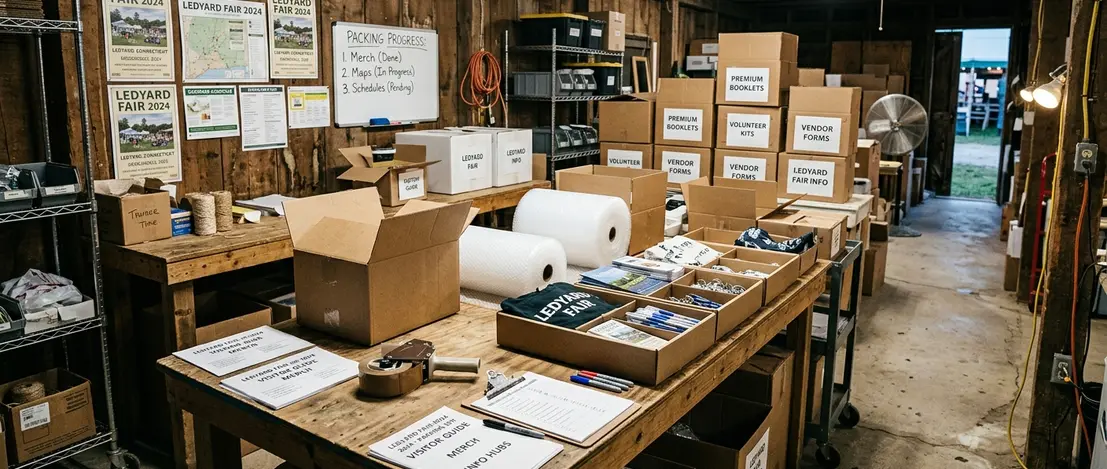
Produce is best transported in cardboard flats, about 3 to 4 inches deep, lined with unprinted paper towels to absorb transit vibrations. For flowers, use shallow boxes, water tubes where appropriate, shade, and careful temperature control during the trip. If you are bringing fragile crafts, educational boards, or baked-style agricultural projects, protect corners, surfaces, and containers from sliding.
Set Up With the Judge’s View in Mind
Final placement matters immensely. The exhibit should be visible, stable, accessible, and compliant with department layout rules. Exhibitors arrange their items by identifying the 'face' or most flawless side of the specimen and rotating it toward the aisle, ensuring the judge's first impression highlights the item's strengths.
For table exhibits, keep the entry tag visible, remove all packing material, and check for last-minute dirt, wilt, or damage. For animal exhibits, focus on clean stall or pen presentation, readable identification, safe spacing, and courteous barn conduct around other exhibitors and visitors.
Quick Tip: Step back into the aisle after placing your item. Look at it from the exact angle the judge will approach to ensure the best features are immediately visible.
Know the Limits: Rules, Safety, and What This Guide Cannot Replace
This guide provides general preparation advice for local agricultural fairs. It does not replace the current Ledyard Fair premium book, department instructions, veterinarian guidance, or state animal health requirements. Fair organizers defer to state agricultural departments for biosecurity protocols, requiring exhibitors to present veterinary paperwork to inspectors before animals are allowed to unload from trailers.
Certificates of Veterinary Inspection (CVI) for livestock must typically be issued within 30 days prior to the opening day of the event. Remind yourself to verify current health paperwork, vaccination, testing, and movement requirements through official channels like the Connecticut Department of Agriculture before fair day. State-level animal health mandates strictly supersede local fair guidelines; livestock entries lacking valid health certificates will be turned away at the gate, regardless of pre-registration status.
Final Fair-Day Checklist
The final departure routine involves a systematic check of the physical item, the required paperwork, and the emergency repair kit to ensure no critical component is left on the kitchen counter.
- Verify the entry matches the exact class description and specimen count in the premium book.
- Confirm the exhibit is gently cleaned, free of pests, and completely dry.
- Check that all entry tags are securely attached with string or hole punches.
- Pack the item in a shallow, lined flat to prevent rolling during transit.
- Gather all required health certificates and registration papers for livestock entries.
Summary: Success at the fair begins weeks before intake day. By reading the premium book closely, selecting uniform specimens, handling items gently, and packing securely for the drive, you ensure your hard work is accurately represented on the judging table.




Comments
No comments.
Write a Comment