
Quick Nav
- Safety and Rail Distances
- Seating and Gate Clearances
- Managing Children at the Ring
- Photos, Noise, and Distractions
- Applause and Lineup Protocol
- When to Ask Fair Staff for Help
Before You Walk Up to the Horse Ring
The transition from the main fairgrounds to the agricultural arenas requires a deliberate shift in mindset. You leave behind the flashing lights and loud music of the midway and enter a workspace. This guide serves as a practical, visitor-friendly manual for watching horse classes at a community agricultural event. It is not a formal rulebook. Instead, it bridges the gap between everyday fairgoers and the specific needs of livestock exhibitors.
Horses are powerful, highly sensitive animals. Good visitor behavior directly protects riders, the animals themselves, volunteers, and your fellow spectators. While the United States Equestrian Federation General Rules govern the competitors, the crowd operates on community respect. Posted signs, ring stewards, announcers, and fair staff always take priority over general etiquette advice. A standard safety buffer requires visitors to remain 3 to 5 feet back from the physical rail when horses are actively passing.
Why Horse Ring Etiquette Matters at a Fair
A fair horse ring is fundamentally different from a casual petting zoo enclosure. Inside that fence, riders are concentrating heavily on their equitation. Horses are responding to subtle physical cues. Judges are scrutinizing movement patterns, and ring staff are managing traffic flow. The environment is highly dynamic.
Repeat visits showed that many spectators simply do not realize how horses perceive the world around them. Horses have a field of vision of roughly 350 degrees and can react to sudden visual or auditory stimuli in well under a second. A movement that seems trivial to a human can trigger a massive flight response in a prey animal.
Families arrive at the Ledyard Fair Association grounds with snacks, strollers, cameras, and excited children. Meanwhile, exhibitors are managing competition nerves, adjusting tack, timing their warm-ups, and handling unpredictable animal behavior. Visitors can absolutely cheer on local riders. You just need to provide competitors with the quiet, predictable space they require to operate safely.
Where to Stand, Sit, and Move Around the Rail
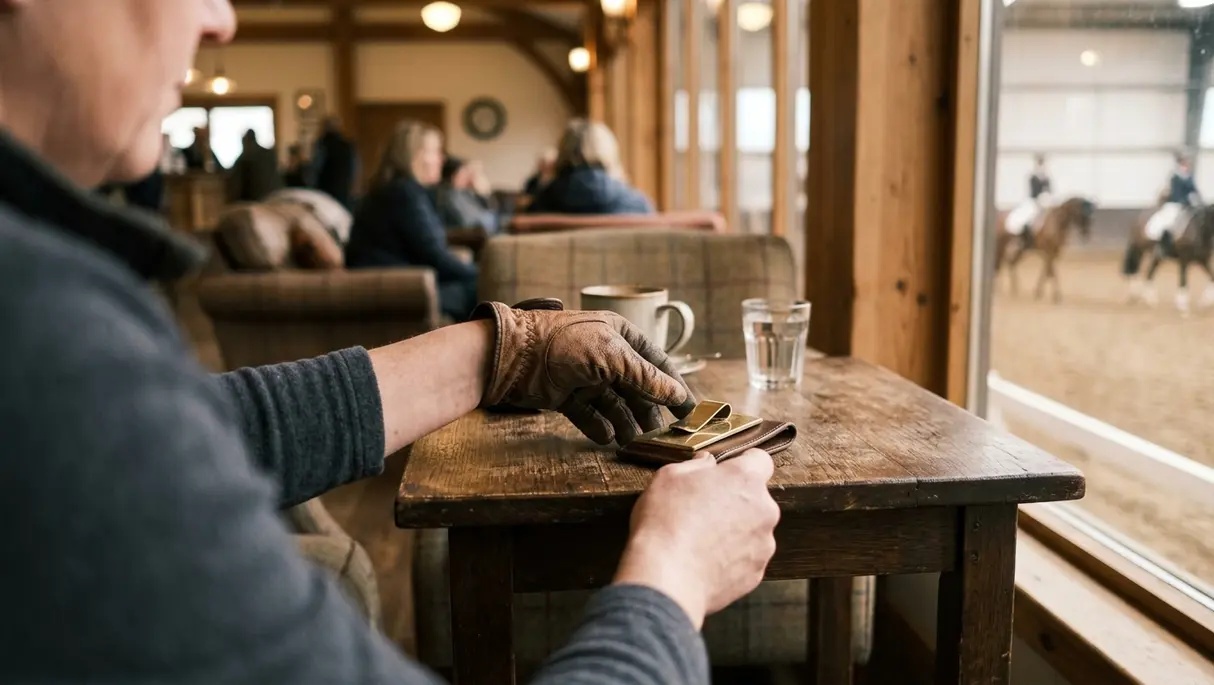
Finding the right place to watch the show is your first logistical hurdle. Always watch from designated spectator areas located outside the rail or fence. Never lean over the barrier. Do not climb on the lower rungs, shake the fencing, or reach your hands through the gaps to touch passing animals.
We initially considered advising visitors to stand near the entry gates for the best view of the horses arriving, but that approach failed quickly. Gates are high-traffic, high-risk bottlenecks. Draft horse hitch gate entry bottlenecks are especially dangerous, as multiple massive animals and wide carts must navigate narrow openings simultaneously. We switched to directing all spectator seating to the long sides of the arena.
Strollers, wagons, and folding chairs must be parked at least 6 to 8 feet away from any entry or exit gate to allow sufficient turning radius for horse-drawn carts and multiple-horse lineups. If you need to move to another viewing spot, wait for a quiet moment. Avoid sudden movements along the rail while a horse is passing close by. Walk calmly to your new destination.
Noise, Food, Pets, and Flash: What to Keep Under Control
Sound and sudden visual changes are the primary triggers for arena accidents. Avoid shouting near the rail. Keep rattling bags, clanging metal water bottles, and loud phone audio completely silenced. Whistles or sudden cheers while horses are passing just a few feet away can easily unseat a rider.
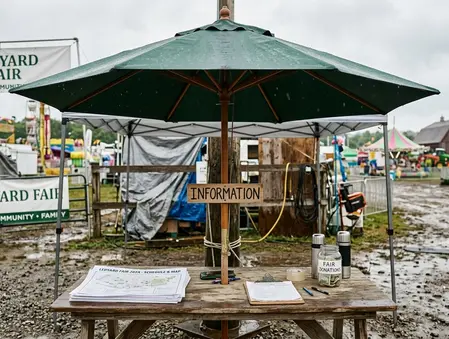
Visual startles are equally dangerous. Opening a standard umbrella expands its profile from nothing to about 40 inches in roughly one second. This rapid shape change mimics predator movement to a horse. If it starts to rain, step back from the rail before opening your umbrella, or stick to rain jackets.
Snacks are perfectly fine in spectator areas if the venue allows them. However, you must keep food, crinkling wrappers, and sugary drinks away from the animals and off the rail. Dropped food attracts stinging insects, which agitate the horses.
If dogs are permitted on the fairgrounds, keep them well away from the horse ring. Barking, lunging, or simply staring intently at horses can create severe risk. A horse cannot distinguish between a friendly family pet and a legitimate canine threat.
Helping Children Watch Safely and Kindly
Agricultural fairs are incredible learning environments for youth. Children are naturally drawn to the horses, but their enthusiasm needs gentle channeling. Pointing, waving, squealing, or reaching toward a horse feels entirely harmless to a child. To a horse, those actions are highly distracting.
Quick Tip: Give parents and caregivers simple language to use before approaching the ring. Tell your kids, "We watch with quiet hands, walking feet, and space for the horses."
Keep children standing beside an adult. Do not let them run along the rail to race the horses. Prevent them from sitting on the top of the fencing, even if you are holding them securely. A sudden spook from a horse can cause a child to fall backward into the crowd or forward into the dirt.
During Classes, Lineups, Photos, and Awards
The rhythm of a horse show dictates when you can relax and when you must pay strict attention. The most critical moments to stay still and quiet are during active judging, rail work, gate movement, and award announcements. The lineup phase is particularly sensitive.
Lineup changes and judge inspections typically take a few minutes per class, during which horses are packed tightly together and highly vulnerable to chain-reaction spooking. When horses are standing still in close proximity, they are actually more susceptible to crowd startle than when they are actively moving along the rail.
Clapping is usually welcome at appropriate moments. Follow the announcer, the crowd, and the ring staff rather than starting loud celebrations right beside the rail. Do not call riders by name while they are competing unless the event atmosphere clearly encourages it. Even friendly shouting breaks a rider's concentration.
Respecting Exhibitors, Volunteers, and Ring Officials
A successful fair relies on a complex network of people. You will encounter exhibitors preparing horses, handlers moving through barn areas, ring stewards managing traffic flow, announcers giving instructions, and volunteers keeping spectators safe near the Cy Anderson Fellowship Hall.
Exhibitors generally need 15 to 20 minutes of uninterrupted preparation and warm-up time immediately before their specific class is called to the ring. Avoid interrupting a rider who is tacking up, entering the ring, cooling out a sweating horse, or listening intently for a class call. If you have questions about the breed or the tack, wait until the horse is safely tied back at the trailer or stall.
Volunteers enforce boundaries to maintain operational safety. When a volunteer asks you to step back, they are managing crowd control logistics. Their directions are a vital part of safe event operations, even if the immediate danger is not obvious to you.
When Rules Differ
Every fairground has its own unique layout and specific hazards. You must remain adaptable. The guidelines provided here cover standard agricultural events, but real-time conditions dictate the final rules.
Summary: These general guidelines defer entirely to the ring steward's real-time commands; if a horse becomes loose or agitated, standard viewing distances are immediately voided and visitors must clear the area entirely.
Quick Horse Ring Etiquette Checklist
Keep these core principles in mind as you navigate the agricultural areas of the fairgrounds.
- Stay at least 3 feet back from the rail.
- Keep entry and exit gates completely clear of strollers and chairs.
- Walk calmly—never run, when moving past the ring.
- Silence loud devices and avoid crinkling plastic wrappers.

Comments
No comments.
Write a Comment