First-Time Visitor Guide to the Ledyard Fairgrounds
Quick Nav
What This First-Time Guide Covers
Before You Go: Build a Simple Fair-Day Plan
Getting There: Directions, Parking, and Shuttle Expectations
Admissions, Ride Wristbands, and Your First Hour Inside
Fairground Rules First-Time Visitors Should Know
Food, Comfort, and Family-Friendly Pacing
Exhibits and Competitions: What New Visitors Are Seeing
Events Worth Watching on a First Visit
Who Runs the Fair and Where to Get Help
Final Current-Year Checks Before You Leave Home
What This First-Time Guide Covers
A first Ledyard Fair visit goes better when the visitor treats the fairgrounds as a working event site, not just a place to wander into and figure out later.
That sounds plain, but it solves the common problems: arriving at the wrong time for the thing a family most wants to see, walking past useful services without noticing them, or assuming every animal on the grounds follows the same rule. The Ledyard Fair brings families, fairgoers, exhibitors, vendors, volunteers, sponsors, and Connecticut fair-circuit visitors into one compact event. Each group moves differently. A parent with children thinks about rides and restrooms. An exhibitor thinks about entry windows, claim tickets, and removal times. A volunteer thinks about gate flow and questions that repeat all day.
This guide gives a practical orientation to arrival, admissions, fairground rules, food, rides, exhibits, competitions, and where to get help.
Summary: Use this as a baseline field guide. The current-year schedule, admission details, vendor list, and ride information still need a final check before leaving home.
Before You Go: Build a Simple Fair-Day Plan
Pick the main reason for the visit
The first planning question is not, “What time does the fair open?” It is, “What would make this visit feel successful?”
For one family, the answer may be ride time and fair food. For another, it may be livestock, agricultural competitions, baking exhibits, or a specific entertainment slot. Exhibitors, vendors, volunteers, and sponsors have a different calculation because they may need to arrive before the casual visitor flow begins. The plan should start with purpose, then work backward to arrival time, parking expectations, and how much energy the group can spend walking.
Use past schedules as a caution, not a promise
Prior fair information has included Friday opening-night hours and a formal opening ceremony. That matters because opening night can feel different from a full Saturday or a Sunday built around final exhibits, pulls, and departures. A visitor who assumes each day behaves the same may miss the better arrival window for their purpose.
Ride wristbands have historically been available for purchase across all three fair days. Families with children should treat wristband availability as a planning item, then verify current-year pricing and terms before promising unlimited rides at the breakfast table.
Quick Tip: Choose one anchor activity before arrival. Then add food, rides, and exhibits around it instead of trying to make the whole fair fit into one lap.
Getting There: Directions, Parking, and Shuttle Expectations
Use Route 117 as the mental map
Route 117 is the useful access-road reference for first-time visitors orienting toward the Ledyard Fairgrounds. GPS may speak in turns and distances, but a fair visitor needs a simpler field cue: get to the correct approach road, then watch for fair traffic, parking direction, and volunteer guidance.
Drivers coming from I-95 should use Exit 88 as the major highway access point. Drivers approaching from I-395 should use Exit 79A. Those two references give visitors a cleaner starting framework than trying to memorize every small road near the grounds.
Parking does not end at the car door
Free shuttle buses have been used to move visitors from parking areas to the gate. That matters for families with strollers, seniors, visitors carrying folding chairs, and anyone arriving with fair gear in one hand and a child’s sweatshirt in the other.
Repeat visits showed that the practical mistake is assuming GPS will route to the main public parking gate rather than a closed service entrance. On fair days, posted signs and volunteers usually matter more than the last instruction from a phone.
Build extra time between highway exit and gate entry.
Keep admission money or payment method reachable before boarding a shuttle.
Note the shuttle return point when stepping off, not when everyone is tired.
Take a photo of the parking area marker if one is visible.
Admissions, Ride Wristbands, and Your First Hour Inside
Handle admissions without guessing at prices
No current admission fee is provided here, so visitors should not rely on old prices or secondhand posts. The sound practice is to confirm admission details through current fair materials before arrival, especially if bringing a larger family group.
Ride wristbands deserve separate attention. Past fair information offered them across all three fair days, which makes them central for families whose children are mainly coming for the midway. The admission decision and the wristband decision are related, but they are not the same decision.
Spend the first hour on orientation
The first hour inside should not disappear in a rush to the brightest attraction. Treat that opening window as site orientation.
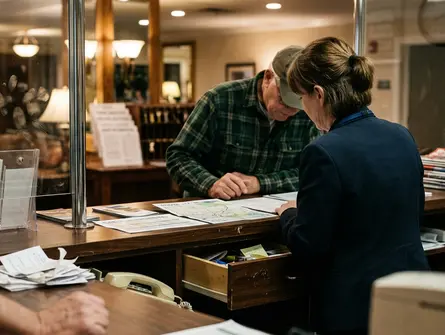
Pause just inside the gate. Identify restrooms, food areas, ride zones, exhibit halls, shuttle return points, and the places where staff or volunteers appear to be answering questions. This is basic wayfinding, but it prevents the late-day scramble when a child needs a restroom, a grandparent needs a seat, or the group splits between rides and agricultural exhibits.
Find the nearest restroom.
Locate the main food area.
Identify the ride zone before buying wristbands.
Look for exhibit halls and quieter indoor pauses.
Confirm where the shuttle returns after the visit.
Fairground Rules First-Time Visitors Should Know
The most important animal rule for ordinary visitors is direct: handicap assistance animals are the only non-entered animals permitted.
That rule separates two very different categories. Animals entered in fair competitions belong to the agricultural side of the event. They are present under fair procedures, exhibitor responsibilities, and livestock-area controls. Assistance animals accompanying visitors serve an access function. A family pet, even a calm one, does not fit either category if it has not been entered in the fair.
This is where gate disputes usually begin. Someone brings a non-entered family pet to the gates and feels surprised when turned away. The better solution is to plan before leaving home and keep pets out of the fair-day trip unless the current rules clearly allow a specific entered or assistance-animal situation.
For broader service-animal context, visitors can review the official ADA service-animal guidance. Fairground rules exist to protect visitors, exhibitors, livestock, volunteers, and the agricultural exhibits.
Note: Do not treat a leash, vest, or well-behaved temperament as a substitute for the fair’s animal-entry rules.
Food, Comfort, and Family-Friendly Pacing
Food is part logistics, part community
Food at a fair is not just a meal stop. It sets the pace of the day.
The Ledyard Lions have served as a food service provider in the fair setting, which fits the community-service character of the Ledyard Fair. That detail is useful because first-time visitors should expect a local fair atmosphere rather than a sealed commercial venue. Lines, seating, weather, and children’s energy levels can shape the day as much as the event schedule.
Plan the pauses before the fatigue
Good family pacing uses natural breaks: food, shaded pauses where available, exhibit halls, and lower-intensity viewing events. The goal is not to reduce the fair to errands. The goal is to keep the group steady enough to enjoy the parts they came to see.
One deep example: a family arriving for rides should still visit exhibits early enough that children have attention left. If exhibits become the “last thing before we leave,” they compete with tired feet, sticky hands, and the pull of one more ride. Put a quieter exhibit stop between food and the midway. The day breathes better.
Eat before everyone is urgently hungry.
Use exhibit halls as slower-paced resets.
Carry only what the group can manage on a shuttle or long walk.
Set a meeting point before older children move toward rides.
Exhibits and Competitions: What New Visitors Are Seeing
The Ledyard Fair is not only a midway or an entertainment stop. It is an agricultural fair with competitive exhibits, traditional contests, and a structure that rewards careful preparation.
Sweepstakes is one example worth understanding because it shows how fair judging turns individual entries into a broader competitive result. In the listed Sweepstakes areas, the category ties to blue ribbon count, with red ribbons used as a tie-breaker under the provided rules context. That means the result is not a vague popularity award. It is tied to ribbon outcomes within defined exhibit areas.
The Sweepstakes exhibit areas are:
Canning
Fruits and Vegetables
Baking
Flower
One catch: the Sweepstakes category rules apply strictly to those exhibit areas and cannot be generalized to livestock or mechanical pulls.
Entry and removal timing matter
For exhibitors, timing is part of the competition system. Source rules identify a Thursday 4:00 p.m. to 7:00 p.m. entry window, a Sunday 6:00 p.m. to 6:30 p.m. removal window, and a Sunday after 7:00 p.m. deadline after which unclaimed exhibits become a problem for the exhibitor. Losing an exhibit claim ticket among food wrappers and ride bands is not a small inconvenience at that stage.
The rules context also notes a minimum of 2 entries for Sweepstakes and a minimum of 3 departments for the Outstanding Competitor Award. New exhibitors should read the current fair book closely before assuming one strong entry can carry every award category.
Events Worth Watching on a First Visit
Use historical lineups to understand range
Historical schedules help explain the shape of the fair, but they should not be read as current-year promises. The September 8-10, 2017 historical schedule timeframe included examples that show the Ledyard Fair’s mix of entertainment, youth agriculture, motorized competition, and animal power.
Garden Tractor Pull, FFA Showmanship, and Oxen Pull are strong first-visit examples because they show different parts of the fair’s identity. The Garden Tractor Pull brings mechanical skill and local competition into view. FFA Showmanship shows youth agricultural preparation and handling discipline. Oxen Pull connects visitors to a much older fair tradition where animal training, teamwork, and crowd attention meet in one ring.
Entertainment fits around the agricultural core
The same 2017 schedule context included entertainment examples such as the LHS Band on Friday and Jay Dempsey Band on Saturday. Those names belong in the guide as historical examples, not as a prediction. The practical lesson is that music and staged entertainment can sit alongside contests, pulls, exhibits, and food service in the same visit.
For a first visit, choose one agricultural event even if the midway is the main attraction. That single decision changes how the fair reads. It becomes less like a generic night out and more like a Connecticut agricultural fair with rides attached.
Who Runs the Fair and Where to Get Help
The Ledyard Fair Association is the organizing body behind the fair. In practice, that means fair information, volunteer coordination, exhibit procedures, and event operations depend on a local association structure rather than a distant venue office.
The Association of Connecticut Fairs, also referred to by many fairgoers as the Association of CT Fairs, provides broader fair-circuit context across the state. For visitors, the more immediate point is simple: local fair volunteers are often answering questions while also managing gates, exhibits, traffic movement, and public flow.
Ask the right question at the right time
Association meetings are identified for the third Tuesday of every month. Peak contact pressure runs through August and September, when visitor questions, vendor matters, volunteer needs, and exhibitor preparation compress into the same season. Commercial or operational inquiries should respect that timing.
On the grounds, places such as Cy Anderson Fellowship Hall may function as a recognizable fairground reference point depending on the current layout and use. First-time visitors should still rely on current signage, posted maps, and volunteer direction once they arrive.
Quick Tip: When asking for help, state the task first: “I need exhibit drop-off,” “I need shuttle return,” or “I need the ride wristband area.” Short questions get clearer answers in a busy fairground.
Final Current-Year Checks Before You Leave Home
The fair changes enough year to year that a good visitor plan needs a final verification step. Historical dates such as September 10-12, 2010, and historical program examples from 2017 show continuity, but they do not replace the current schedule.
Check the daily schedule, opening times, admission details, ride wristband terms, animal rules, parking guidance, shuttle information, and any weather-related advisories. Vendors and entertainment can change. Volunteer staffing can affect where help is easiest to find. Weather can turn a simple parking plan into a slower arrival.
The best first visit is not the one with the longest checklist. It is the one where the visitor knows why they came, understands how to get in and move around, respects the agricultural rules, and leaves enough margin for food, exhibits, rides, and one event they did not expect to enjoy.
Summary: Start with purpose, verify the current-year details, use Route 117 and the shuttle system thoughtfully, orient during the first hour, and treat the fair as both a community event and a working agricultural fair.






Comments
No comments.
Write a Comment