

Quick Nav
- Give one musical act a place in the fair day
- Read the listing before connecting performances
- Match the viewing position to the group
- Keep the stage-change gap available
- Check the next act before crossing the grounds
- Move the group safely through weather delays
- Build the day around the must-hear set
Give One Musical Act a Place in the Fair Day
Ledyard Fair is an annual agricultural fair in Ledyard, Connecticut. Music shares the outing with agricultural exhibits & competitions, food stops, and other entertainment & attractions. A workable plan gives one priority performance a firm place, then keeps surrounding stops movable.
Three separate demands shape that plan: pedestrian traffic between fair stops, equipment turnover between acts, and weather announcements. Each can change when a group reaches a performance area or when the music begins.
The useful starting question is simple: which performance would the group most regret missing? Place that act first in the itinerary. A barn visit or food stop can then fill the surrounding time, with enough room to finish, walk over, and settle before the listed start.
Read the Listing Before Connecting Performances
A performance listing supplies the route's basic information. Check the event date, performer name, listed start time, and designated performance area wherever those details appear. Keeping those details together helps prevent a group from following the right performer to the wrong place or using another day's schedule.
A start time and a performance duration answer different questions. An explicitly printed end time helps establish whether another set fits afterward. The interval between consecutive start times may include the first performance and the work required to prepare for the next act.
When two desired performances overlap, choose which one matters most. Splitting the slot also introduces an exit, a walk through fairground traffic, and another search for a viewing position. Compare printed end times with the next start, then account for that movement before committing to both.
Keep the chosen performer's name and original start time handy; those details also make later questions to event staff more precise.
Match the Viewing Position to the Group
Closer positions can improve sightlines, while positions farther back can make departure easier. The useful comparison includes sound comfort, nearby pedestrian movement, and the route back to a pathway. A group planning to leave together should examine all of those conditions before settling.
Children need a sightline check from their own height. An adult's clear view says little about what a child can see between standing spectators. Confirm a recognizable meeting point before attention shifts to the stage.
Sound Comfort Near Speakers
Sensitive listeners should have suitable hearing protection, such as earmuffs or earplugs. Greater distance alone does not guarantee a safe sound level, so choosing a rear position should accompany attention to hearing protection.
For visitors with mobility needs, ask event staff about the actual approach, available seating arrangements, and an unobstructed exit route. Check the ground and access path before the group commits to a spot. The aim is a position that supports both watching the performance and leaving comfortably.
Keep the Stage-Change Gap Available
A quiet stage can still be a busy work area. Between acts, crews may clear instruments, reposition microphone stands, connect instrument cables to the mixing board, and run vocal and instrument line checks. Those tasks occupy part of the gap shown on a schedule.
That makes the printed interval a poor place to pack several errands. A food queue, restroom stop, and return walk each add a separate demand, while the next act still needs a ready stage.
Work backward from the priority performance instead:
- Allow time to enter the viewing area and choose a position.
- Account for the walk through pedestrian traffic.
- Finish restroom and food stops before that approach.
- Leave space for everyone to regroup before moving toward the music.
The transition begins when the group leaves its previous stop, rather than when it reaches the stage. Keeping that whole movement visible makes the plan easier to follow.
Check the Next Act Before Crossing the Grounds
Make the update check before the walk. A revised start time, changed performance area, temporary pause, or cancellation can each require a different destination or departure decision.
- Review current fair-published announcements. Compare the update's date and posting time with the schedule copy saved earlier.
- Listen for on-site announcements. Match the message to the performer and performance area under discussion.
- Ask event staff for clarification. Give the performer's name and originally scheduled start time when instructions conflict or remain unclear.
A saved schedule remains useful for identifying the act, but day-of changes should guide the next move. Read the substance of an update as carefully as its timestamp: a later start keeps the destination, while a relocation changes the route.
Before setting off, pass the same instruction to everyone in the group. That keeps one person from heading toward the original location while another follows the revised announcement.
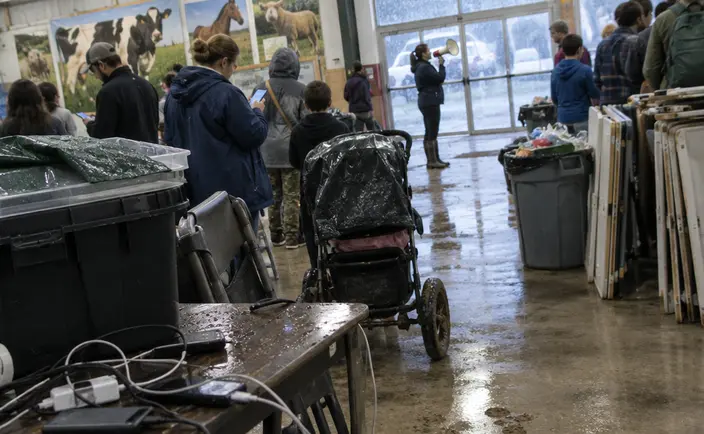
Move the Group Safely Through Weather Delays
Weather messages describe different states. A performance pause means the music has stopped temporarily; it supplies no new start time by itself. A revised start gives the group a new time to plan around. A cancellation removes that set from the day's route.
Follow event staff instructions promptly rather than holding a viewing position while waiting for the music to resume. Keep the group together and move clear of stage cables, electrical distribution equipment, and slick footing around production areas.
Thunder Means Shelter
When thunder is heard, seek a substantial enclosed building or an enclosed hard-topped vehicle. Fabric fair tents and open-sided agricultural pavilions are not lightning shelters.
Use the announced shelter directions and confirm that every group member has received them. Once sheltered, check fair-published updates and listen for further instructions. A break in the rain should not replace the event's directions about what happens next.
Build the Day Around the Must-Hear Set
A family's music plan can stay compact: choose the priority act, verify its latest listing, finish errands before approaching, and select a comfortable viewing position. Agree on the post-set meeting landmark before the opening song. Keep the following food stop or agricultural exhibit visit flexible so transitions and announcements can shape its timing.
The family reaches the edge of the viewing area together. A child checks the view between the adults; another family member points out the agreed meeting landmark. Hearing protection comes out of a bag, the saved listing goes away, and everyone turns toward the opening song.






Comments
No comments.
Write a Comment