
Quick Nav
- Build Fair Shifts Around Handoffs Before Recruiting Helpers
- Confirm Each Volunteer Post and Give It a Clear Owner
- Build the Roster Around Busy Posts, Breaks, and Backup Coverage
- Write Shift Notes the Next Helper Can Use Immediately
- Pack a Volunteer Station Kit Before Fair Weekend
- Give Every New Helper a Short On-Site Walkthrough
- Route Late Arrivals, Absences, and Fair Updates Through One Lead
- Close Each Shift With a Handoff Worth Reusing Next Year
Build Fair Shifts Around Handoffs Before Recruiting Helpers
A dependable fair volunteer team starts with a clear handoff, before the first helper signs up.
For a small team helping during Ledyard Fair weekend, the useful starting question is simple: what must the next person know to keep this post moving? A name on a roster cannot answer that. A short task description, a supply location, and a named lead can.
Visitor directions and supply restocking are examples throughout this guide, not confirmed fair assignments. Clear any proposed post with the fair coordinator before recruiting for it.
I would draft the handoff sheet first. It exposes missing decisions while there is still time to settle them.
Confirm Each Volunteer Post and Give It a Clear Owner
Start with the coordinator’s confirmed needs: operating times, reporting locations, permitted tasks, and the person responsible for each post. Check the current plan with the Ledyard Fair Association’s designated coordinator rather than carrying forward last year’s assumptions.
A Visitor-Information Role Card
This illustrative card needs local approval before use:
- Post: Visitor-information position at the confirmed reporting location.
- Purpose: Help visitors find destinations using approved fair information.
- Routine tasks: Answer wayfinding questions, distribute approved schedules, and flag low supplies.
- Coordinator: Record the designated lead and approved contact method.
- Equipment: List the materials and communication equipment actually issued.
- Situations requiring help: Questions about admission decisions, accessibility arrangements, emergencies, or conflicting information.
A helper can point out a destination shown on an approved map. Decisions about admission exceptions or accessibility arrangements belong with the designated lead. Record the organizer’s emergency procedure separately and make sure the helper knows where to find it.
Build the Roster Around Busy Posts, Breaks, and Backup Coverage
Ask volunteers for availability, task preferences, relevant experience, and any accommodations they choose to share. Collect only the contact details needed to coordinate their participation; keep accommodation details out of a shared station roster.
Use this blank structure for each assignment:
- Volunteer: __________
- Assignment: __________
- Start and finish: __________
- Reporting point: __________
- Break cover: __________
- Backup: __________
- Confirmation status: __________
Match coverage to the coordinator’s expected demand and confirmed program. Where a post needs continuous attention, schedule room for the outgoing helper to brief the incoming person while someone remains available to visitors.
Check breaks as carefully as arrivals. A backup name helps only when that person has agreed to the assignment and knows how the lead will reach them.
Write Shift Notes the Next Helper Can Use Immediately
The handoff sheet should answer a practical question: what needs attention now? Separate standing instructions from live updates so a replacement can find the answer quickly.
The Reusable Post Sheet
- Post: Name and confirmed location.
- Standing instructions: Approved directions, task boundaries, supply location, and escalation contact.
- Last updated: Date, time, and updating helper.
- Current status: What is operating normally and what has changed.
- Unfinished tasks: Work still waiting for attention.
- Next action: The specific task the incoming helper should address first.
Keep the standing instructions at the top and dated updates below. Repeat a supply location or contact in an update when a change makes that necessary.
Illustrative visitor-information update: Approved printed schedules are running low. Replacements are in the storage location confirmed by the lead and recorded above. Ask the lead to arrange replenishment. Check with the lead before changing any posted information.
Before leaving, ask the incoming helper to repeat the next action and identify the escalation contact. That brief exchange catches ambiguity while both people are still present.
Pack a Volunteer Station Kit Before Fair Weekend
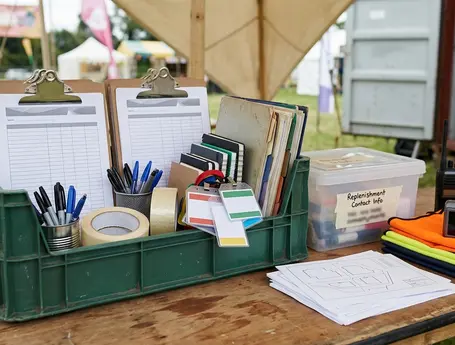
Loose paper becomes hard to manage when a breeze catches the table. Pack shared materials together and protect the documents volunteers need to read throughout the shift.
- Clipboard, pens, and spare paper.
- Protected shift notes and the confirmed roster.
- Current, approved fair information.
- Weather protection for documents.
- Any organizer-issued communication equipment assigned to the post.
Keep personal preparation on a separate reminder: suitable footwear, weather-appropriate clothing, and drinking water. A station kit should never leave volunteers guessing about what to bring themselves.
Restocking Permission
Write down where replacements come from and who can authorize replenishment. Confirm access rather than assuming volunteers can enter locked storage, use charging points, borrow radios, or take first-aid supplies.
Give Every New Helper a Short On-Site Walkthrough
Walk the immediate work area before assigning independent work. Show the reporting point, explain the task boundary, locate supplies, confirm the break arrangement, and demonstrate how to get assistance.
A welcome can stay brief:
“Here is your post, here is the next task, and here is who to contact if you are unsure.”
Then let the helper locate the handoff sheet and explain the next task back. Familiarity with the grounds does not replace knowing the boundaries of this particular assignment.
For an unanswered visitor question, acknowledge it, contact the designated lead, and wait for approved information. Guessing about a schedule or fair rule creates another problem for the next helper.
This walkthrough covers routine support posts; livestock rings, tractor pulls, gate cash boxes, and traffic control need separate authorization and safety briefings.
Route Late Arrivals, Absences, and Fair Updates Through One Lead
Choose a primary communication channel the team can actually use. Confirm a fallback reporting point or contact method for anyone who cannot access it.
Ask volunteers to report delays as soon as they know about them. Give them this message structure:
Affected post: ____. Change: ____. Coverage needed: ____. Start time: ____. Please acknowledge receipt and confirm the coverage plan.
Swaps Need Approval
A private agreement between helpers remains a proposed swap until the designated lead approves it and updates the master roster. The lead needs to check the replacement’s availability, task readiness, and effect on other posts.
Use that same channel for approved fair updates, then replace outdated station information so helpers have a clear version to follow.
Close Each Shift With a Handoff Worth Reusing Next Year
Before signing out, record unfinished work, identify depleted supplies, return issued equipment, and confirm that the incoming helper or lead has taken responsibility. An empty post with a completed sheet still needs coverage.
After the weekend, thank volunteers and ask which instruction was missing, which supply ran short, and which assignment needs a clearer boundary. Save the useful operational notes for the next fair; remove personal details once coordination and retention needs have ended.
Make the reusable handoff sheet the first document you prepare for the next Ledyard Fair volunteer team, before opening recruitment.













Comments
No comments.
Write a Comment