From Agricultural Displays to Busy Fair Aisles
Community fairs have always given people a place to show what they grow, make, and care about. A visitor walking the aisle today still wants that connection, but often has only a few steps to understand a booth before the next display catches their eye.
Good booth signs answer three questions quickly: Who is here? What is offered? What should I do next? The ten tips below put those answers where visitors need them. Think in three visual tiers: an aisle-facing offer, a menu or explanation beside the line, and a short action prompt at the counter. Each tier has a different job.
Make the Booth Name and Offer Visible From the Aisle
Tip 1: Put the booth name above the display
Place the vendor or organization name where someone approaching from the aisle can see it. A small card tucked behind baskets, baked goods, or a standing volunteer disappears as soon as the booth gets busy.
Before opening, stand down the aisle and look back. If the name vanishes behind merchandise, raise it or move it toward the front of the allotted space. Keep signs and supports within the setup area permitted by fair organizers.
Tip 2: Say what visitors will find
A name tells people who you are. The next line should tell them why to stop. If a booth sells pies, “Fresh pies” gives a passing visitor useful information immediately. If it recruits helpers, “Ask about volunteering” opens a conversation. Those phrases belong beneath the name, in lettering that remains easy to pick out amid the display.
Keep the hierarchy simple: booth name, offer, then details. A farm name may matter deeply to its customers, yet an unfamiliar visitor first needs to recognize the product. Let the offer do that work without crowding the name off the sign.
Let Visitors Read Menus and Prices Before They Join a Line
Tip 3: Group choices where decisions begin
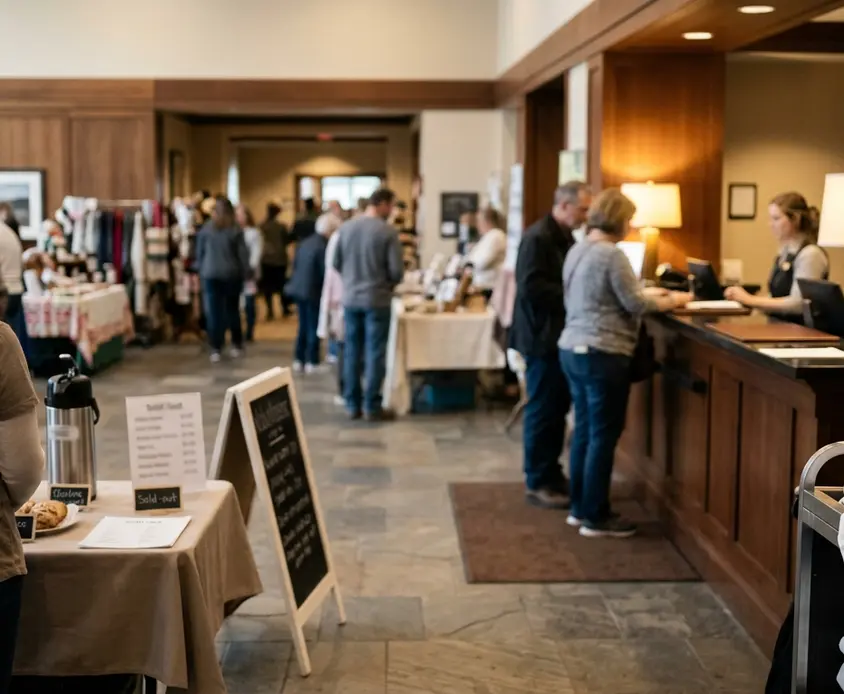
A menu helps most when visitors can read it before reaching the ordering point. Put it beside the approach to the line, facing people as they arrive. They can decide while waiting, and the person at the counter can concentrate on taking the order.
For a booth selling baked goods, broad headings such as “Fruit Pies” and “Gluten-Free Options” are easier to scan than a dense block describing every item. Keep fuller ingredient information available for questions, especially when someone needs to check what a product contains. The main menu should make the initial choice clear.
Tip 4: Keep each price beside its item
Put prices next to the corresponding items, with options and add-ons clearly separated. A visitor should be able to tell whether a listed price covers the item they want without asking the person ahead of them in line.
Check the board against what is actually for sale that day. When something sells out, remove or cover its listing promptly. An outdated sign sends visitors to the counter expecting an item the booth can no longer provide.
Explain the Cause, Then Ask for One Clear Action
Tip 5: Give the mission one concrete sentence
At a nonprofit booth, people often pause because the cause interests them. Give them a sentence they can grasp while standing in an active aisle. Describe whom the organization serves or what its fair activity supports, using language the group can back up.
Save the full history for a conversation or handout. A long paragraph on a sign asks visitors to stop and read while others move around them. A short purpose statement leaves room for a real question.
Tip 6: Invite an action available right here
After the purpose, offer one immediate next step. “Ask about volunteering” works when someone at the booth can answer. “Sign up here” works when the signup is ready. A donation prompt belongs on the sign only when visitors can make a donation there and the organization can explain its use accurately.
Choose the action the booth can support throughout its shift. If volunteers change over, make sure the next person knows where the signup sheet is and what to say. Clear signs lose their value when the promised next step has no clear handoff.
Guide Foot Traffic With Signs People Can Actually Read
Tip 7: Separate ordering from pickup
If customers order at one end of a booth and collect items at the other, mark both points. Place “Order Here” where approaching visitors can see it before they settle into a line. Put “Pickup” where it guides people onward without drawing them across the ordering queue.
Walk the edge of the booth space and watch where each sign sends someone. The aim is to keep the approach clear for neighboring exhibitors and people passing through the aisle. Confirm current sign-placement and attachment rules with fair organizers; another booth’s setup may have different permissions.
Tip 8: Test the words from the visitor’s path
Directional signs need bold contrast and few words. Counter details can use smaller text because readers stand closer. A QR code belongs at that close-range level too; it cannot do the job of an aisle-facing direction.
Walk toward the booth from the main aisle, then repeat the approach while other people stand at the counter. Can you still see the offer and the place to order around shoulders and displays? Shift the sign’s height or angle until the answer is clear. Readability at setup is only the first test; readability with a waiting group is the one that counts.
Make QR Codes Optional and Prepare Signs for Fair Weather
Tip 9: Tell visitors what a scan opens
Write a brief label beside a QR code, such as “Full menu” or “Volunteer signup,” and scan it with a phone before opening. Check that the page loads where the sign will sit. Fairground reception can be uneven, and visitors may prefer to keep their phones in their pockets.
Leave the essential offer, price, and next step in print. A code can carry extra detail for an interested visitor, but the booth should make sense to someone who never scans it.
Tip 10: Fasten signs and check for glare
Wind can turn a loose menu into a moving target. Use sturdy holders and secure attachments suited to the booth’s permitted setup. Protect paper from rain, then look at every covered sign in direct light. A glossy cover can keep a page dry while making its words difficult to read.
Do a final check in the conditions the booth will face, with the display fully stocked and its covers in place. Follow the fair’s current setup instructions when choosing where and how to attach signs.
Walk the Aisle Before You Open
Ask someone unfamiliar with the booth to approach from the main walkway. Without an explanation, can they identify who is there, understand the offer, find the price or action, and see where to stand? Watch where their eyes go and where their feet stop. That short walk reveals more than another round of editing at the counter.
Fix the first missing answer before adding anything decorative. My recommendation is firm: put a readable offer and price at the aisle before spending space on a decorative sign or QR code.


Comments
No comments.
Write a Comment